
Arizona Deed Records
Deed records in Arizona show who owns land and when it changed hands. Each of the 15 counties keeps its own deed files. The elected County Recorder in each county handles all deed recording and searches. There is no state database that covers all of Arizona. You search county by county for the property you need. Most counties now offer free online search tools. Some records go back to the 1800s. Anyone can look up deeds in Arizona.
Arizona Deed Records Quick Facts
Arizona County Recorder System
Arizona uses a county-based system for deed records. Each county has an elected Recorder who serves a four-year term. The Recorder's office handles all real property documents. This includes deeds, mortgages, liens, plats, and surveys. The office stamps each document with the date and time it arrives. It then enters the document into the public record. Once recorded, a deed cannot be removed under any circumstances.
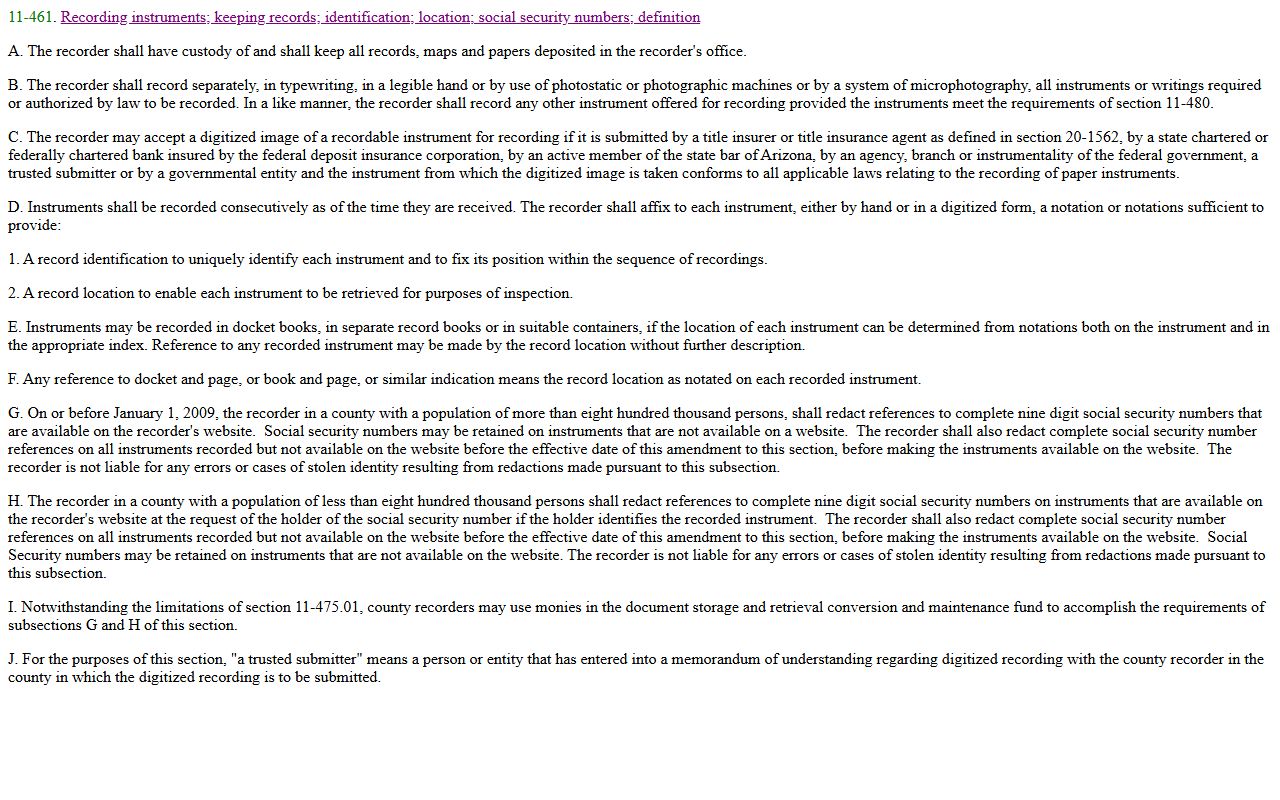
The state legislature sets rules for recording, but each county runs its own office. Arizona Revised Statutes Section 11-461 requires County Recorders to record all instruments that affect land title. This law has been in place for decades. The Recorder must keep an index by grantor name and grantee name. Some counties also index by property address or parcel number. All 15 counties follow the same basic rules, but office hours and fees for copies can vary slightly across Arizona.
Most County Recorders now offer online search portals. These let you search from home any time. You can look up deeds by name, date, or document type. Some systems let you search by address. Images of the actual recorded documents are often free to view. Certified copies must be ordered in person or by mail in most counties. Each county picks its own software vendor for the online system, so the look and feel varies from place to place in Arizona.
Search Deed Records Online
Each Arizona county maintains its own search portal. Maricopa County has the largest database. Their system covers records from 1871 to the present. You can search at recorder.maricopa.gov for free. Pima County offers a public access portal with records from 1982 forward. Pinal County uses Acclaim software with records from May 1980. All three systems are free to use and available 24 hours a day.
Smaller counties have online records too. Coconino County has documents from 1981, with images from 1999 to now. Yavapai County uses Tyler Technologies software. Navajo County has records from 1994. Even the smallest counties now have some online access. Greenlee County, the least populated county, has document images dating back to before 1956. Apache County has images from 1879 with a watermark on each page. Most counties add new recordings to the online system within one business day.
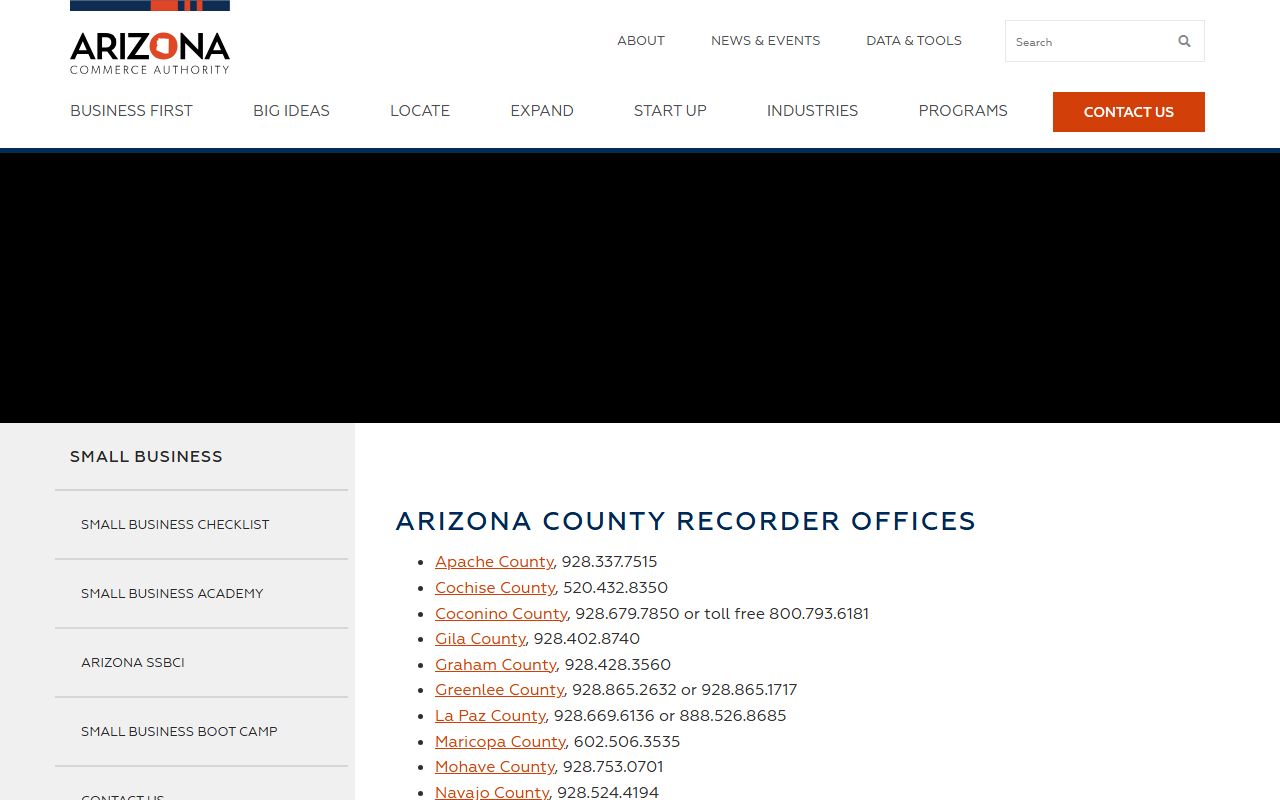
To search for a deed online, you need at least one name. The grantor is the person who sells or gives the property. The grantee is the person who receives it. Some systems let you search by document number if you have it from a prior search. The Arizona Commerce Authority maintains a list of all 15 County Recorder offices at azcommerce.com with phone numbers and links.
Deed Recording Fees in Arizona
Recording a deed in Arizona costs $30 per instrument. This fee is set by state law. Arizona Revised Statutes Section 11-475 took effect on July 1, 2019. The $30 fee applies to all standard deeds, mortgages, and similar documents. Government entities pay a reduced fee of $15 per document. Plats and surveys have different fees. The first page costs $24. Each added page costs $20 more.
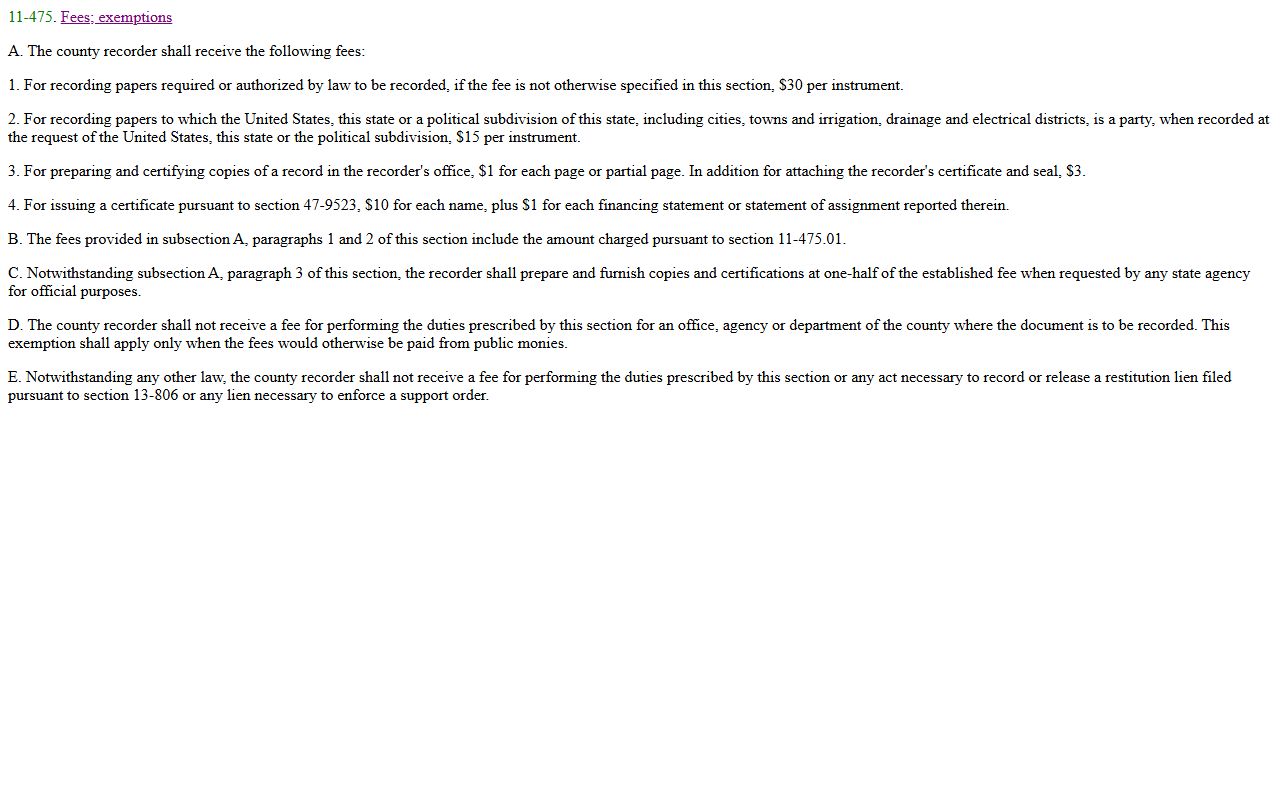
Certified copies cost extra. Most counties charge $1 per page plus a $3 fee for the seal. Some counties accept credit cards in person. Others take cash or check only. A few counties charge a small surcharge for card payments. You do not pay a fee to search or view records online. The fee applies only when you record a new document or order certified copies.
Affidavit of Property Value must accompany all deeds that transfer property. Some counties include this in the base $30 fee. Others charge it separately. Check with your county Recorder before submitting a deed to confirm the total cost in your area of Arizona.
Recording Requirements for Deeds
Arizona law sets strict format rules for recorded documents. Arizona Revised Statutes Section 11-480 covers these requirements. The first page must have a two-inch top margin. This space is for the Recorder's stamp. All text must use at least 10-point font. Pages must be on white or near-white paper, 8.5 by 11 inches or 8.5 by 14 inches. Black ink only. No highlighting or colored marks.
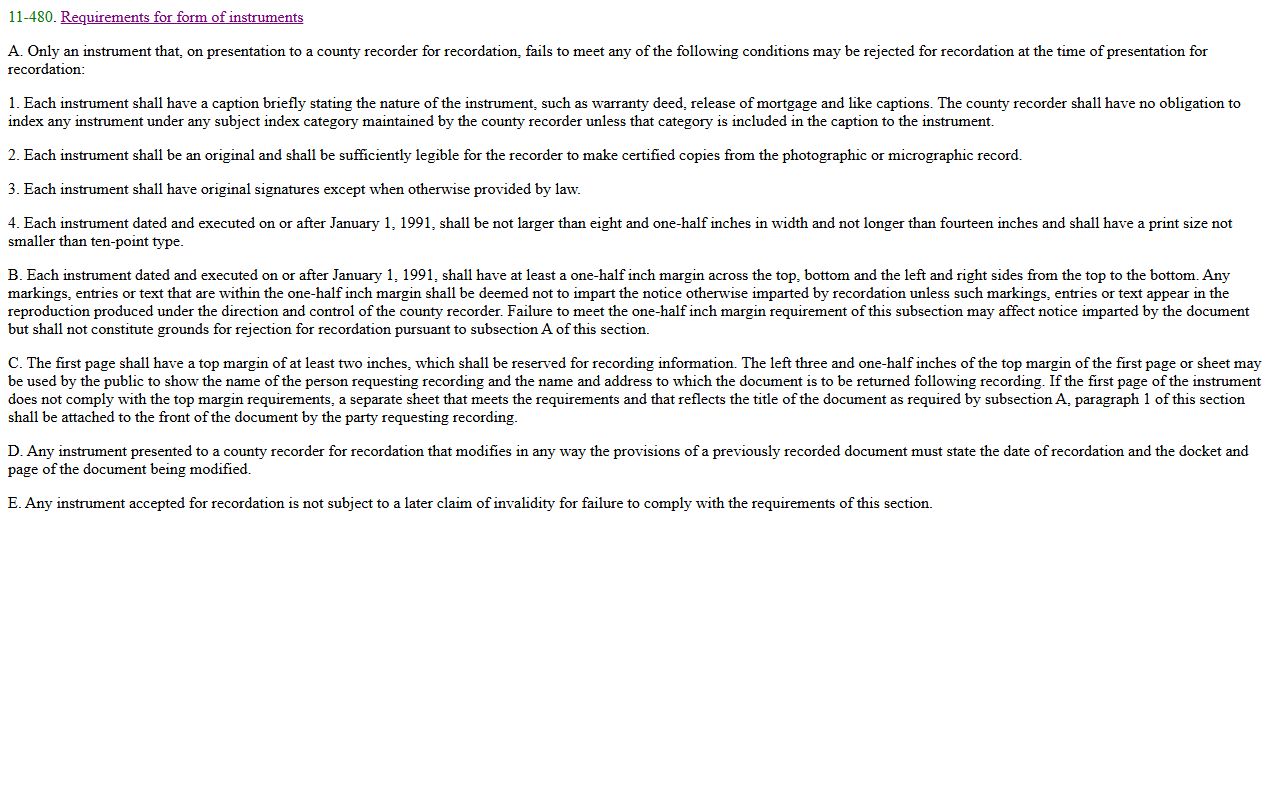
Each deed must include the legal description of the property. It must also name the grantor and grantee. Both parties must sign. Signatures must be notarized. The notary must use a stamp or seal that meets Arizona standards. Some County Recorders can reject a document if it does not meet all format rules. Documents submitted without the correct fee will be returned unrecorded. This can cause gaps in the chain of title, so get it right the first time in Arizona.
E-recording is now common in Arizona. Many counties accept electronic submissions through approved vendors. Data Services, eRecording Partners Network, Simplifile, CSC, and Indecomm all serve Arizona counties. E-recording often processes faster than paper. You get a digital receipt right away. The system checks for some format errors before submission. But you still must meet all the same legal rules as paper filings in Arizona.
Types of Deeds in Arizona
Arizona recognizes several deed types. Each serves a different purpose. A warranty deed offers the most protection. The grantor promises they own clear title and will defend against any claims. Most sales use warranty deeds. A quitclaim deed transfers only what the grantor has, with no promises. It is common for transfers within families or to fix title defects. Quitclaim deeds are fast and simple but offer less security to the buyer in Arizona.
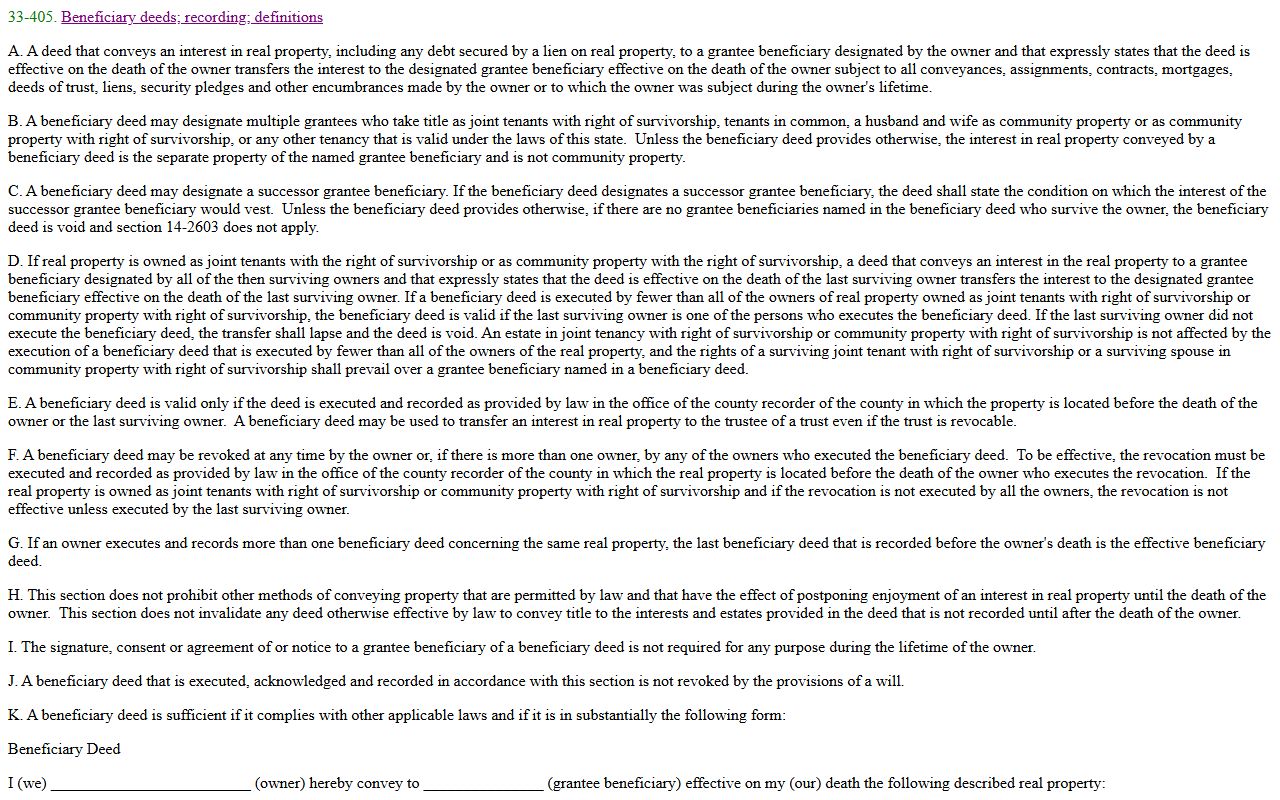
Beneficiary deeds became popular after the legislature passed new laws. Arizona Revised Statutes Section 33-405 allows property owners to name a beneficiary who will take the property on death. This deed lets you avoid probate. You keep full control of the property while alive. The beneficiary gets nothing until you die. You can cancel or change it any time before death. Many Arizona homeowners now use beneficiary deeds as part of estate planning.
Special warranty deeds are less common but still used. The grantor warrants only against claims that arose during their ownership. Trustee's deeds transfer property from a trust. Sheriff's deeds transfer property sold at foreclosure or execution sale. Tax deeds transfer property sold for unpaid taxes. Each type has its own legal effect under Arizona law.
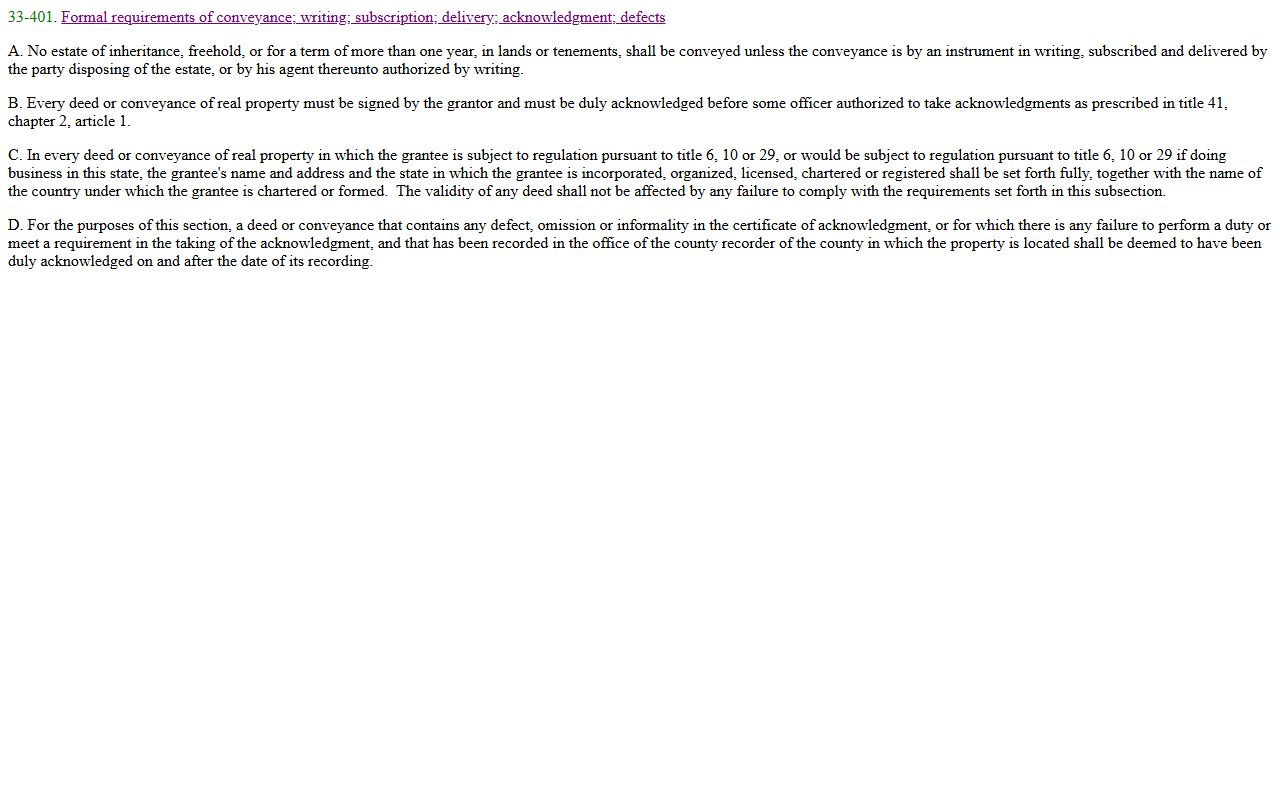
Formal requirements for deeds appear in Arizona Revised Statutes Section 33-401. A deed must be in writing and signed by the grantor. It must describe the property and name the grantee. It must show intent to convey the property. Recording is not required to transfer ownership, but it protects the grantee against later claims. An unrecorded deed is valid between the parties but may lose to a later buyer who records first in Arizona.
Public Access to Deed Records
Deed records are public in Arizona. Arizona Revised Statutes Section 11-483 addresses confidentiality. Most deed records have no limits on access. Anyone can search, view, and copy deeds. You do not need to own the property. You do not need to give a reason. County Recorders must provide public access during business hours. Online systems extend access to 24 hours a day in most counties across Arizona.
Some personal information may be redacted from public copies. Social security numbers must be removed per state and federal privacy laws. Financial account numbers are often blacked out. But the core information in a deed remains public. This includes names, property descriptions, sale prices, and mortgage amounts. Title companies, real estate agents, attorneys, and the general public all rely on open access to deed records in Arizona.
County Recorders cannot give legal advice. They can explain how to search their system. They can tell you the cost to record or copy a document. But they cannot tell you which deed type to use or how to fill out a form. Contact an attorney or title company for legal help with deeds in Arizona.
Browse Arizona Deed Records by County
Each county in Arizona has its own County Recorder who keeps deed records. Pick a county below to find local contact info and online search portals for deed records in that area.
Deed Records in Major Arizona Cities
Residents of major cities record deeds at their County Recorder office. Pick a city below to learn about deed records in that area.